Ana Marija Botteri
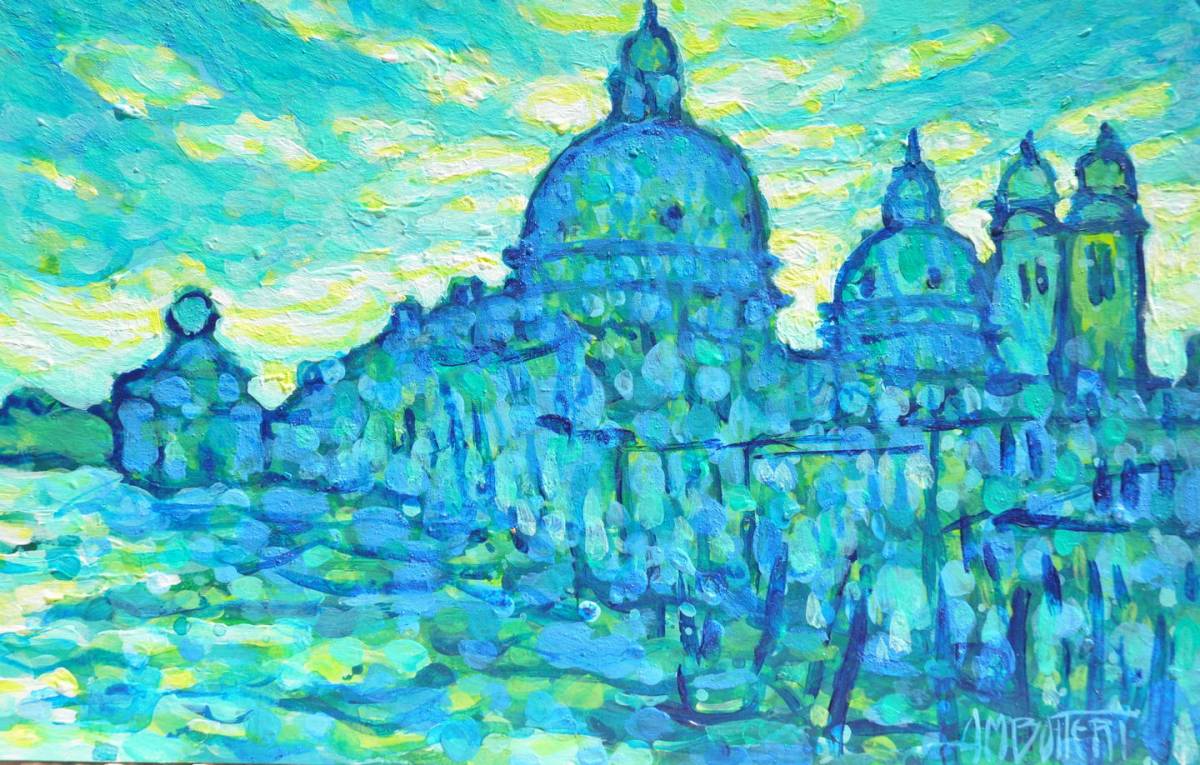
Returning from a long journey or dreamed landscapes open up European vistas of Paris, Vienna, Zagreb, Dubrovnik, Split, all united in a coloristic cry of the real and the imaginary. Ana Marija Botteri enters the cities, into volumes that have sprung up on Euclidean elements: rectangles, lines, planes, cubes, pyramids, spheres, into spaces long envisioned by the master builder who knew that construction contains three basic elements: dispositio (arrangement, draft, foundation, plan), constructio (building, creation), and venustas (beauty). In a rich curiosity, a trait also possessed by her professor Mato Peić, our finest stylist in artistic expression, the painter reveals her vistas, particles, details, and historical palimpsests on the volumes of regularly aged architectural structures, embedded in a web of lines drawn in dark blue or saffron-purple divisions. Like golden torches on sunlit edges, in a high-toned color palette, the fugues emerge in the eye of the special viewer, realizing what lies in the manuscript behind and above pictorial reality.
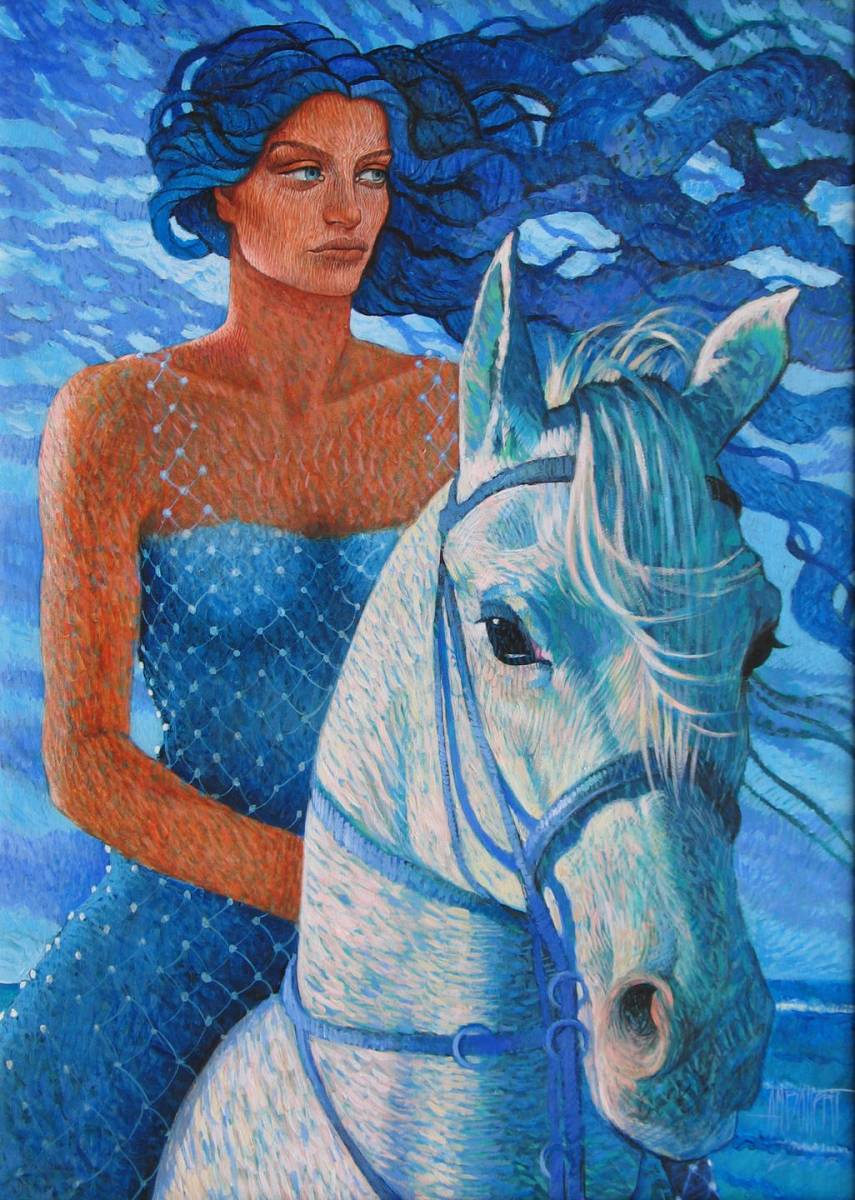
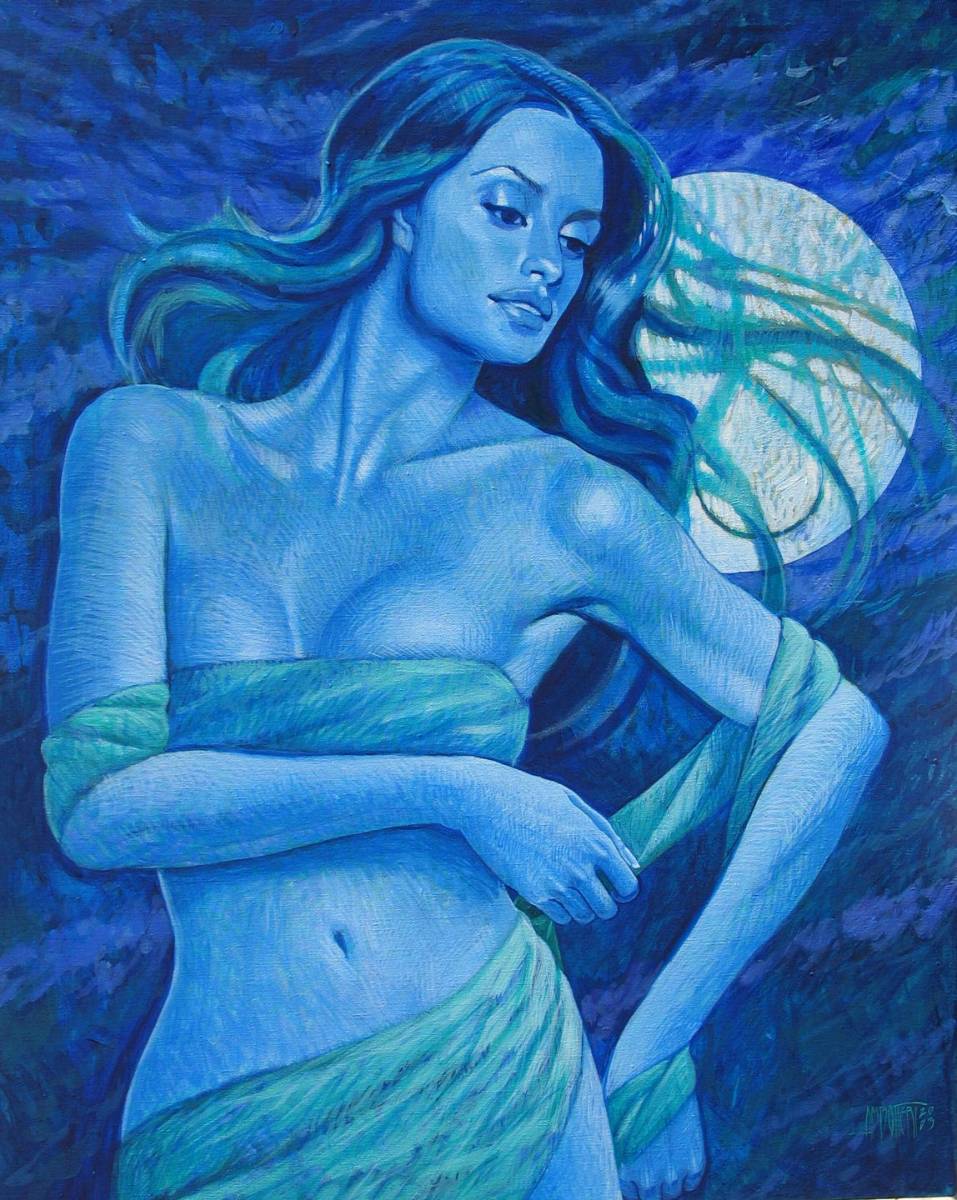
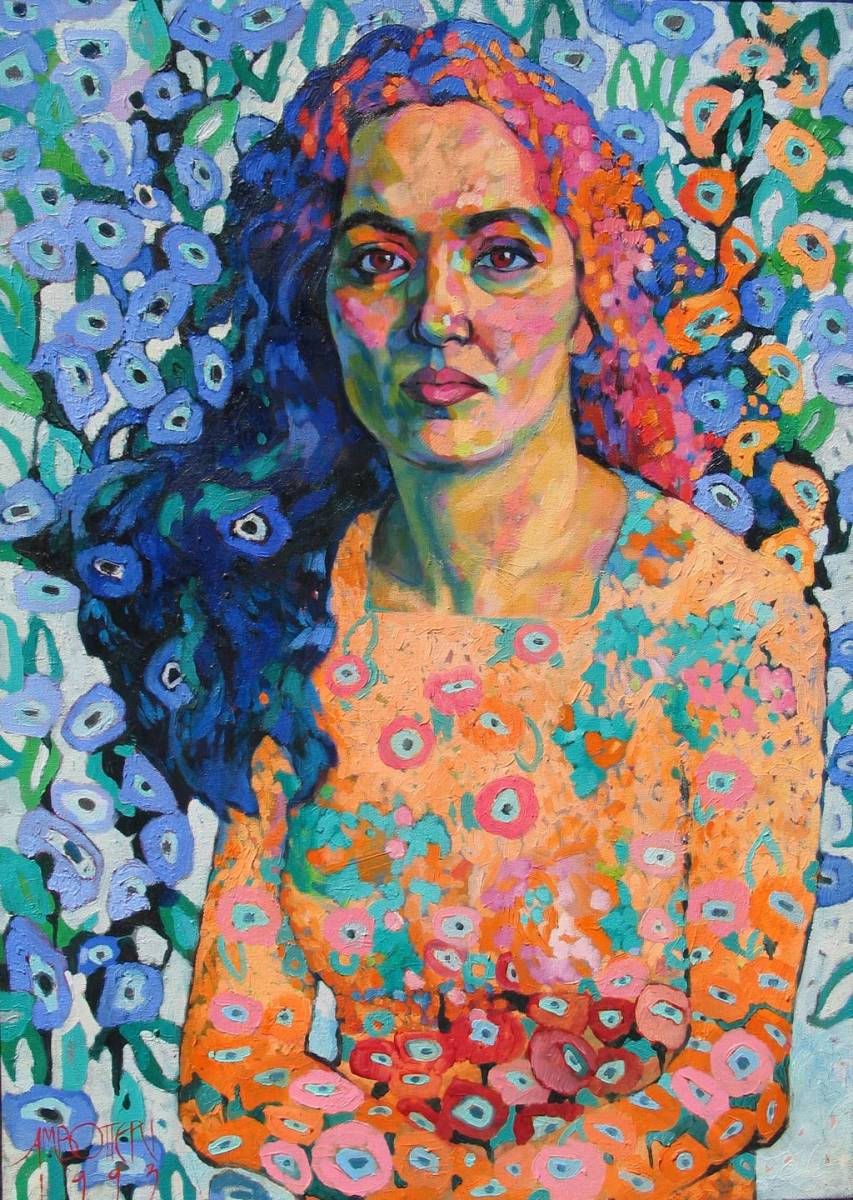
If Ana Marija Botteri is known for her adherence to the figurative and coloristically brilliant style she has achieved over all these years since her first exhibition in 1993, her dark night of the soul and the rhetorical silence that has always existed between her world and her inner self have not been highlighted in criticism. She existed on the Croatian art scene as a magnificent fresco of the spiritual climate of the south and sea, full of symbolic tension in her feminine portraits and literary touches of post-impressionism, especially Art Nouveau. She dealt with the laws of the universe and human destiny, sometimes with sonorous and melancholic reminiscences, exploring inexhaustible tonal values and the possibilities of complementary clashes or harmonious monotonal consonances, but at the depth of it all lay the longing for the magnificent meaning of life, for God's hand guiding her through mysterious clarity into the promised land of spirituality. Ana is a mystery, like every human being, and transcends the possible simple linearity within her artistic work.
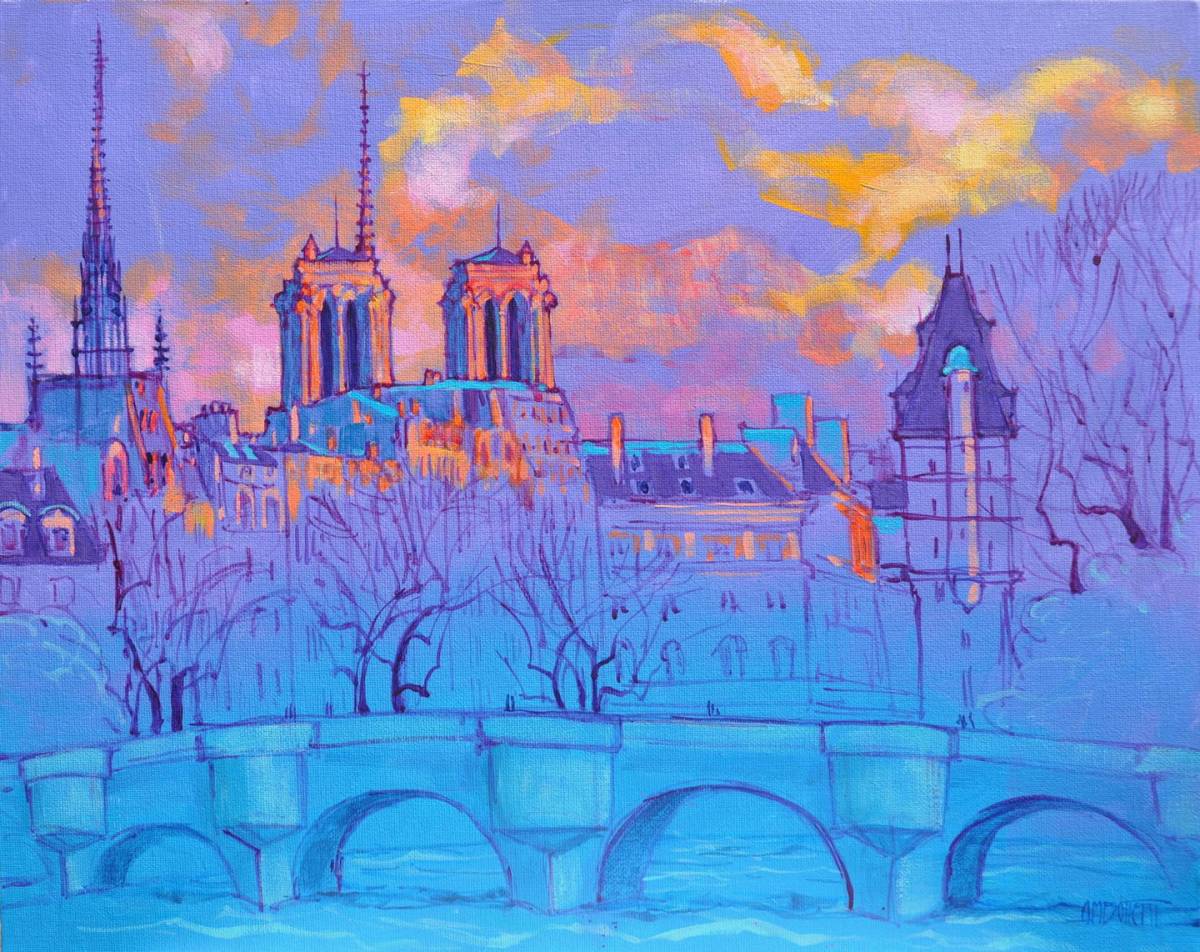
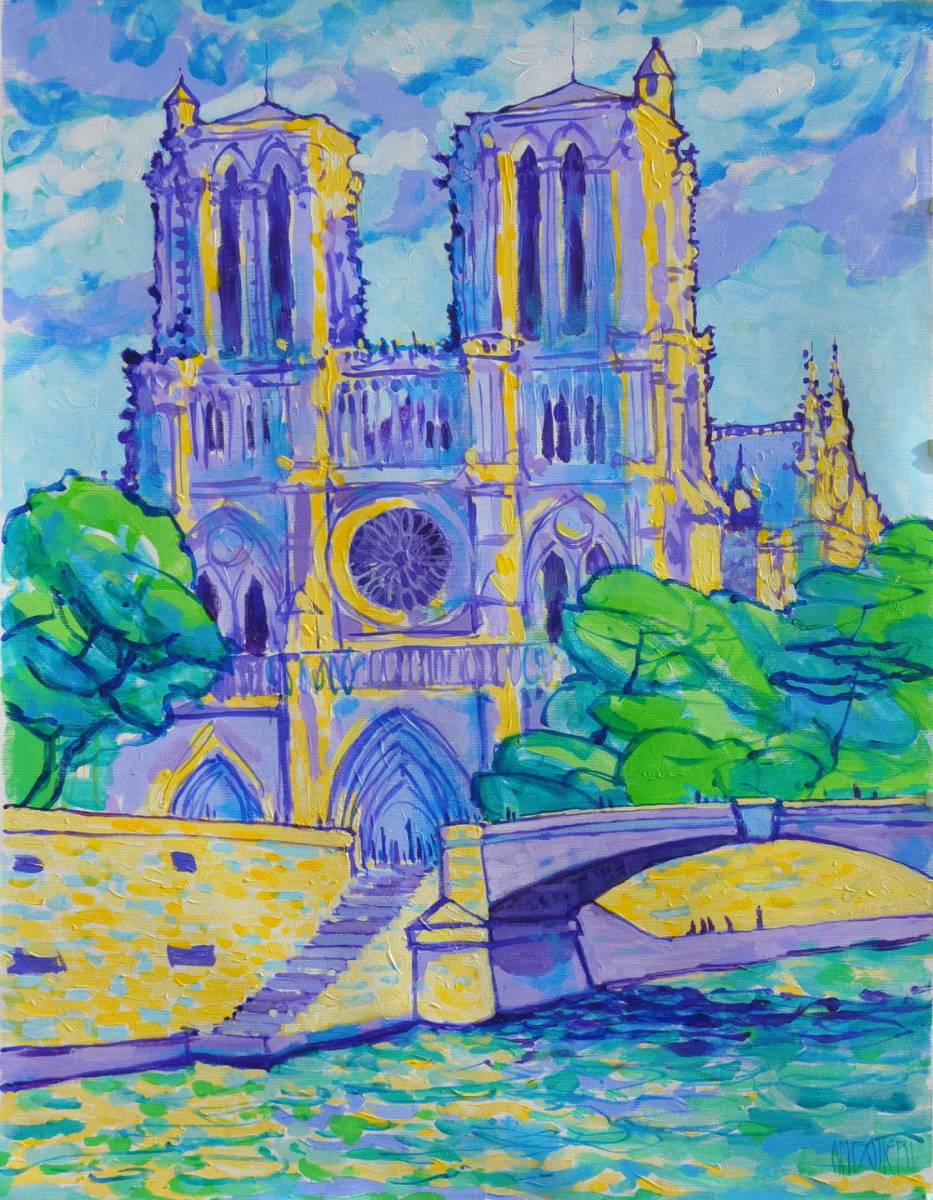
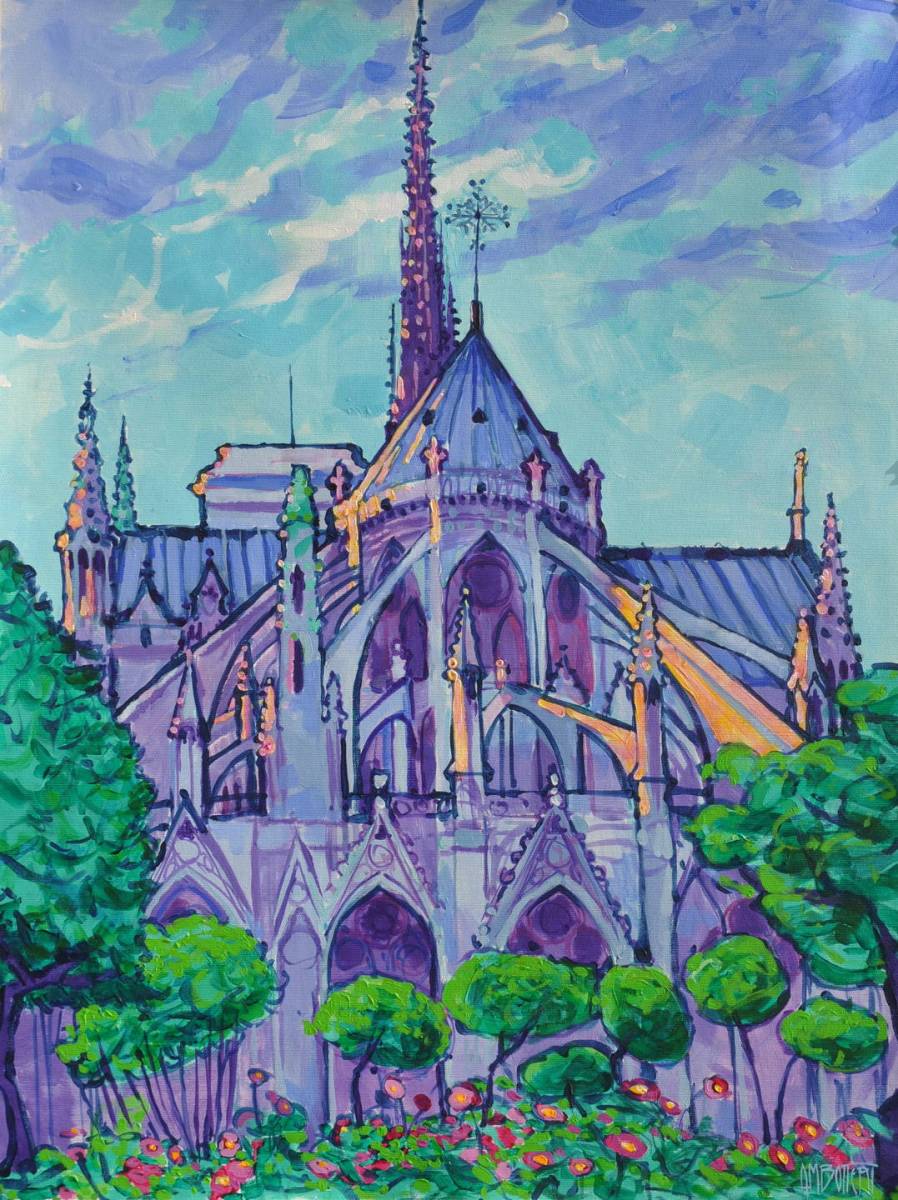
Her encounter with the Parisian scenery brings a familiar signature full of vibrant colors, a diverting cheerfulness, and the stripping away of patina from facades, bridges, and the Notre-Dame church in the early or late sun of the day. The painter's gaze seeks unusual compositional details, unburdened by the grandeur of the entire ensemble, creating a poetic toponym in almost all times of the day, in the silence of light and
stone Gothic peace. The acrylic technique, in its purity of tonality, encloses volumes in purple, green, or pink planes or tachist divisions, from emerald green vegetal overgrowth to pink, swirling skies. The Gothic Sainte-Chapelle speaks wondrously and fantastically, while dark dividers delineate architectural planes with lines. Blue spires piercing the sky, enshrouded in vials, reveal a painter who respects architectural figurativeness, yet subtracts from the literal geometry of the original master with a polyphony of color and light.
Altogether, in this encounter with the volumes and vedutas of European cities, a passionate southern soul will prevail in a rhapsodic weaving of colors. When the composition stops at just one detail, the tip of a tower or an acroterion ornament, cutting off other rational sensations, the painting gains freedom of flight, an abstract detachment from the whole, unburdened by the monolithy of vast foundations, becoming a light-winged association, a digression, a Matoš verse or a Peić morsel.
Daylight bestows upon the motif all its beauty: the lyrical silence spread across the dome of Sacre-Coeur, along with rose-green hues and orange clouds; the view of the bridge facilitates the old Paris it carries on its gently rounded back, whose towers and spires pierce the wondrous sky – the Pont des Arts in various iterations; the light from within dissolves the riches of emerald flora, with luxurious strokes of deep dark tones against the backdrop of Notre-Dame, a purple or ultramarine calm at dusk as it fades, offering a suggestion of solitude, revealing fractured realities with an edge of carmine over a secret blue, aiding the linear agitation of the hand over bridges, clashes, and collisions of swirling graphemes, the peculiarities of composition that are particularly evident in this work.
How many Croatian painters visited Paris and painted unforgettable scenes: Vlaho Bukovac, Josip Račić, Miroslav Kraljević, Vilko Gecan, Zlatko Šulentić, Juraj Plančić, Mladen Veža, and many others! Of course, Josip Botteri Dini too, whose influence on Ana's painting is evident in places, but they are separated by a line of strong personality and original style. Paris is an artist's mecca, a city of light and cultivated artistic charge. Ana's Paris gained vibrancy and powerful coloristic force, a peculiar aesthetic in her choice of subjects, new small authentic truths, a rhapsody of warmth and cheerfulness, her artistic novelty in her oeuvre of wanderings, meditations, and soliloquies in mornings and evenings, a new sense of existence, and a new interpreter. It is also a contemplative solitude in which the world of the city seems perfect.
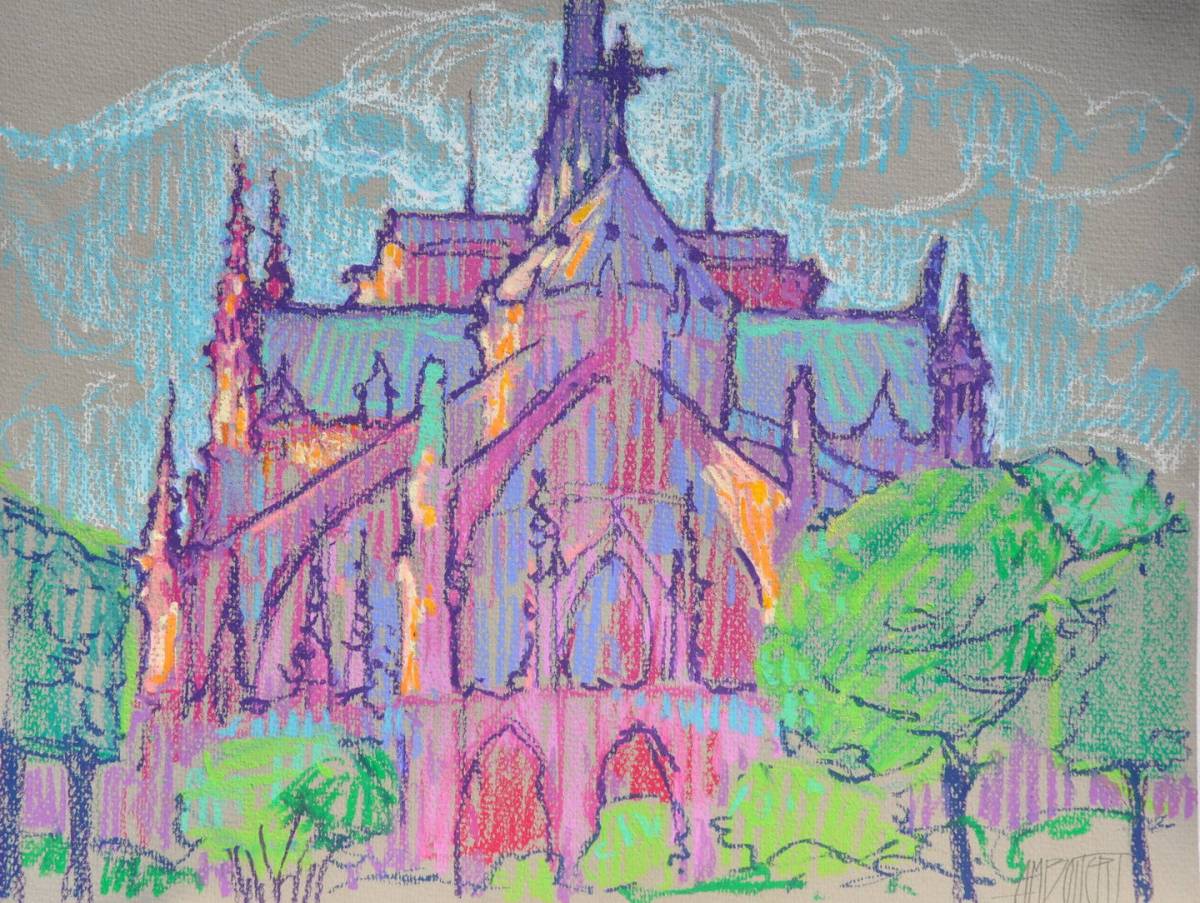
This relationship continues in the technique of pastels, various sketches, and drawings, in which the artist negates the seen by emphasizing the imaginary: perhaps the most poetic work is the side of Notre Dame, rose-blue, pastel and airy, rendered like lace on a lady's dress, and the slender tower serves as a reminder that we are discussing volumes and architecture only at the end. Some of the sketches are a complete summary of visual experience, syntactically reduced to an unfinished outline, like Matoš's solitary figure in the middle of the universe, a monochrome individual, or an amorphous mass of swirling strokes. In short and powerful sketches, which could have been preparatory work for a painting, the gently inclined planes of buildings are rhythmized, sometimes connected into an inseparable mass in dark tones, or rendered very loosely against the void that complements this minimalism. The sketches also hide the confidence of the eye and hand, achieving sudden compositional, cinematic cuts of planes—larger or smaller particles of a vibrating song of melancholy, a frozen moment that will irrevocably disappear with the sun.
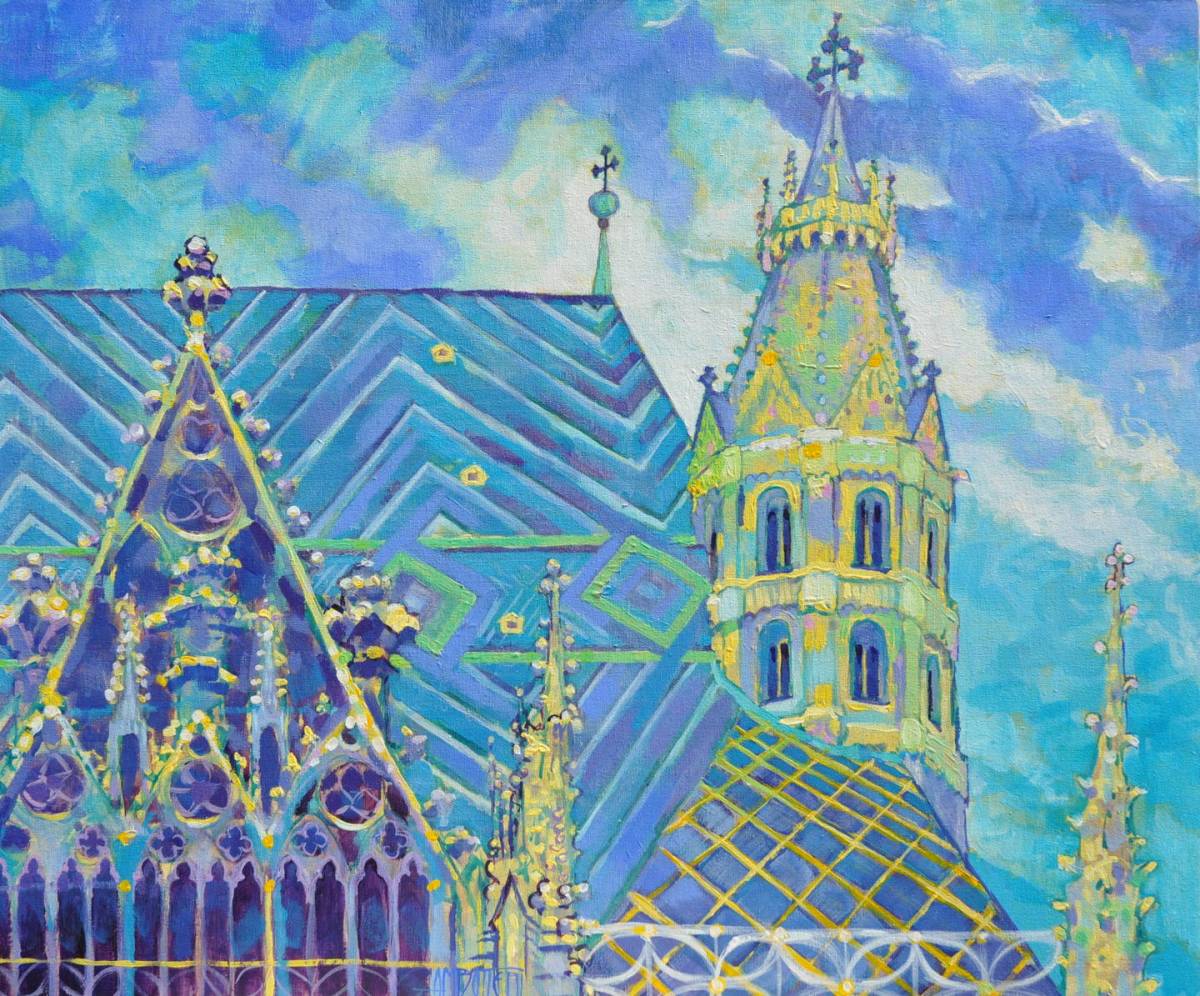
The devotion to beauty remains significant even in the Viennese scenes of St. Stephen's or City Hall, these Gothic light lace weavings. Therefore, the pastel
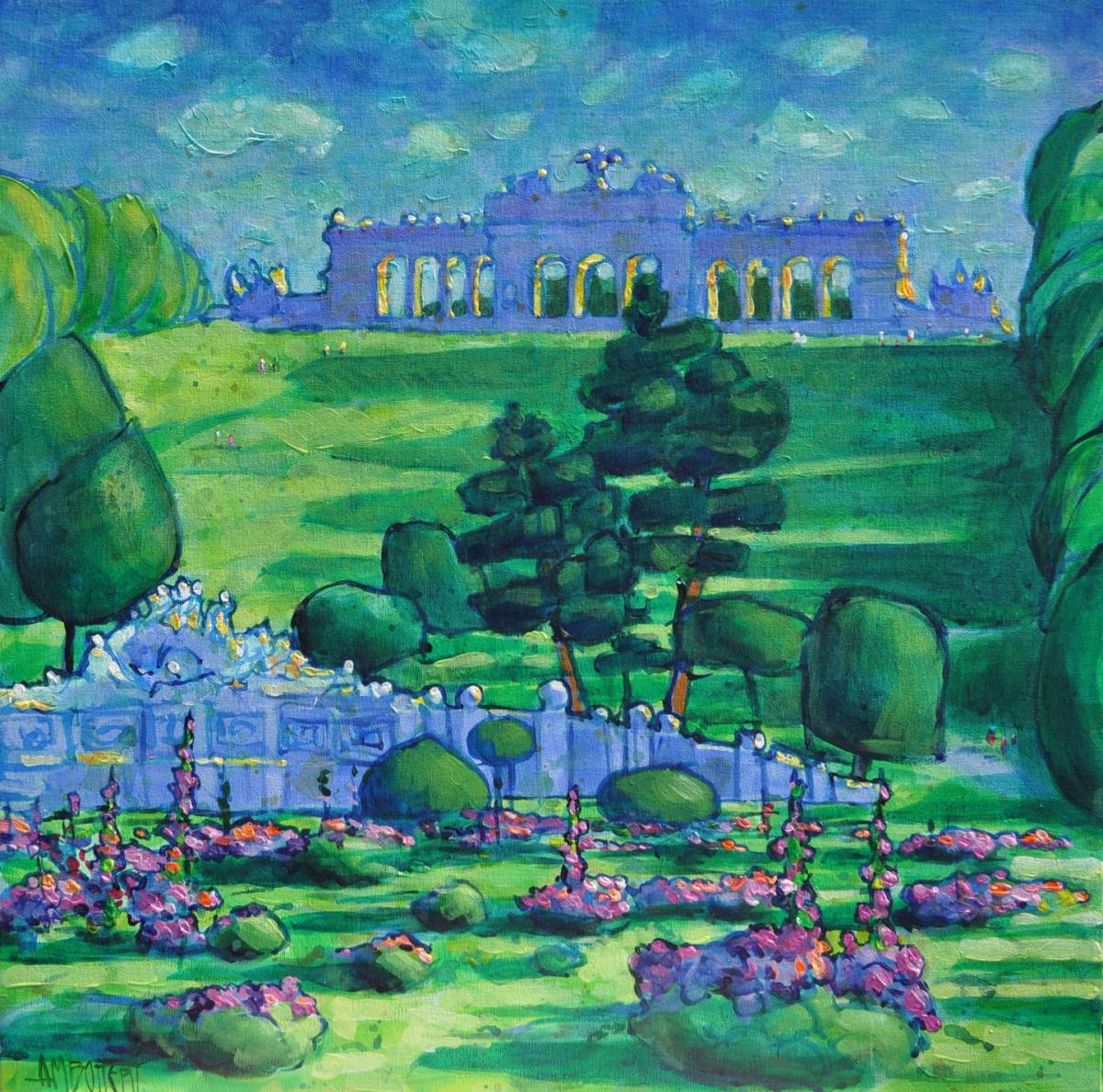
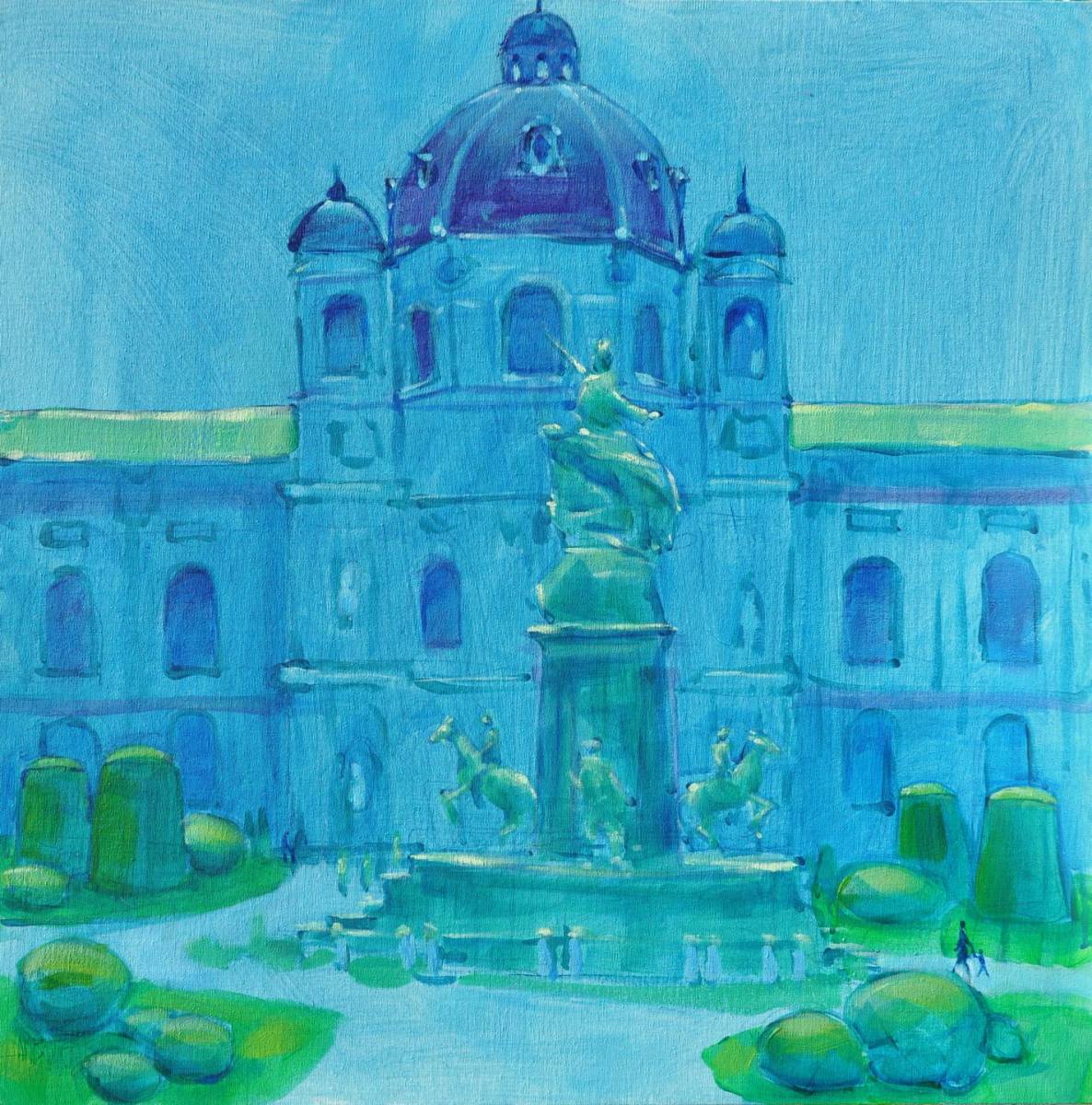
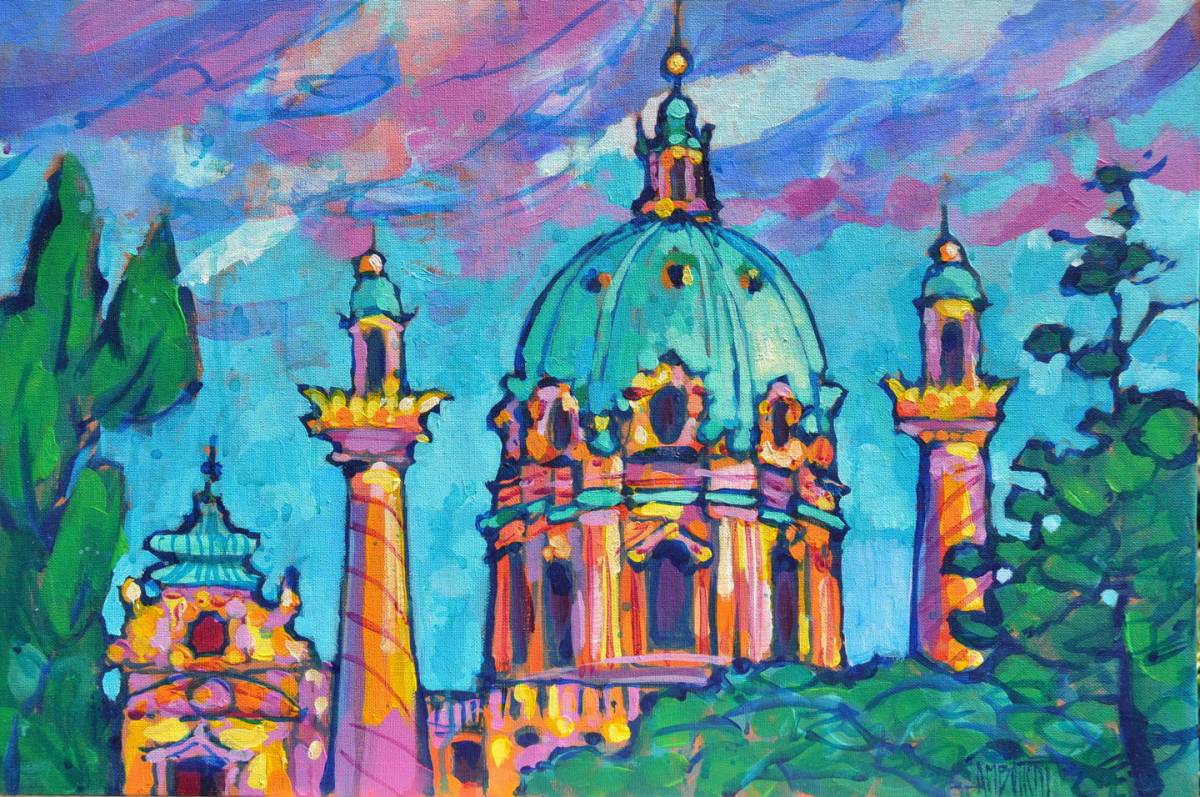
the facade of a church in a yellow-blue uniform, or pinkish-blue against a pale sky, to render pointillist whites, and to present variations on the same theme or parts of the architectural structure—a solitary tower, a fluorescent ornament, a faun-like monster—each time offering an unexpected composition, an atmosphere, a vision of the rarely observed relationships between the horizontal and the vertical, the symbolism achieved by the builder, not suspecting—or perhaps knowing—that in the creation of such a concrete art as architecture, the Platonic notion of being 'separated from all matter' always creeps in. Meanwhile, the old Baroque Vienna was captured by the artist's hand as the blue Hofburg with the green expanse of the melancholy promenade, avoiding the complete scene, choosing instead slender details, curves, and columns that preserve the powerful historical portrait of a distant empire. The harmony and symmetry of the logical Baroque avenues and the designed belvederes of Schönbrunn or Belvedere—on-site paintings carried away by the vistas, by the vast expanses of lawn bordered by emerald or golden trees—in order to paint various versions of the Gloriette from the belvedere. Through observation, this is abstracted into the silhouette of a geometrized plane, as are the trees, which are shaped in a cubist manner within the composition. The picturesque Church of Saint Charles Borromeo, with its dominant dome and colonnades in several variations: from carmine red in a thick application and the power of its mighty architecture, to the dissolution of expressive imagination, but just as much of clear objectivity. The energy of builders and painters, verticals and horizontals, cylinders and spheres in collision, but not merely for the sake of mimesis's citation, but primarily for the experience that constitutes the image's tectonics and brings forth the solemnity of the magnificent edifice.
In the European cities' meeting, Zagreb appears in the pastel shades of winter on Zrinjevac with its obligatory pavilion and fountain. In one instance, seen in purple and white, or in another, a pink and green experience of plane trees wrapped in silk. There's something dove-like about it, as if the souls of our childhood and youth have paused here, a quiet kindness we remember from long ago. The image is always an ontological imprint, an echo of the perception of the past and present, a reminder of love and death, or some ancient infatuation.
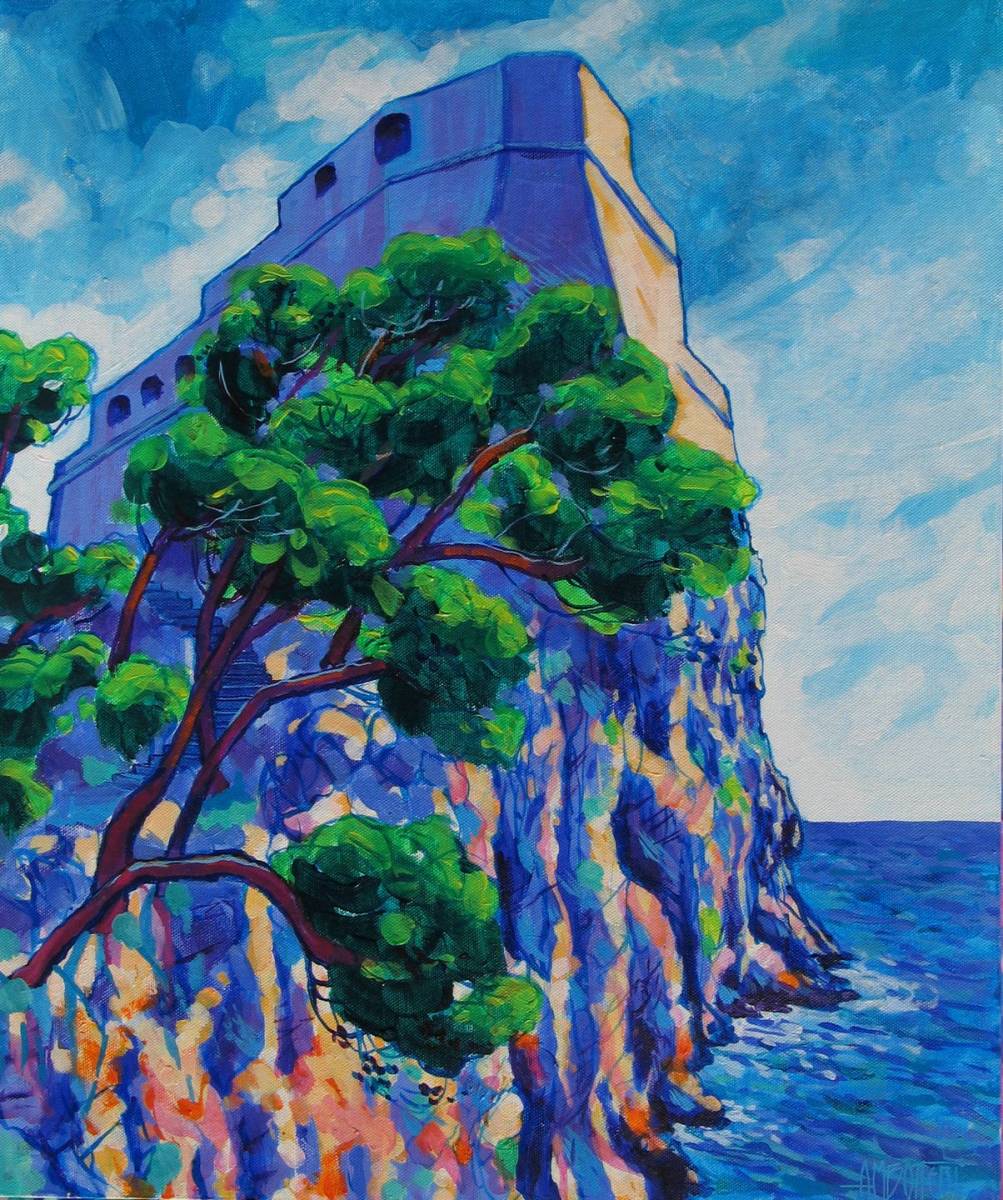
Perhaps Dubrovnik, as a station in Ana's thematic artistic circle of travels, is a City of Wonders, composed of spaces and volumes captured as a veduta or in parts (Lovrijenac, Cathedral), always somehow blue-red, with crowded, rhythmic roofs, domes, bell towers, walls. The language of the image: allow me to feast on your beauties and scents! It is her and our archetypal space filled with precious dynamic stone memories, a summary of the past that speaks of origins and the mystery of the phenomenal, patinated into the mythical. Beneath the giant walls, tiny figures of elongated shapes, dreamily walk as if from the depths of antiquity.
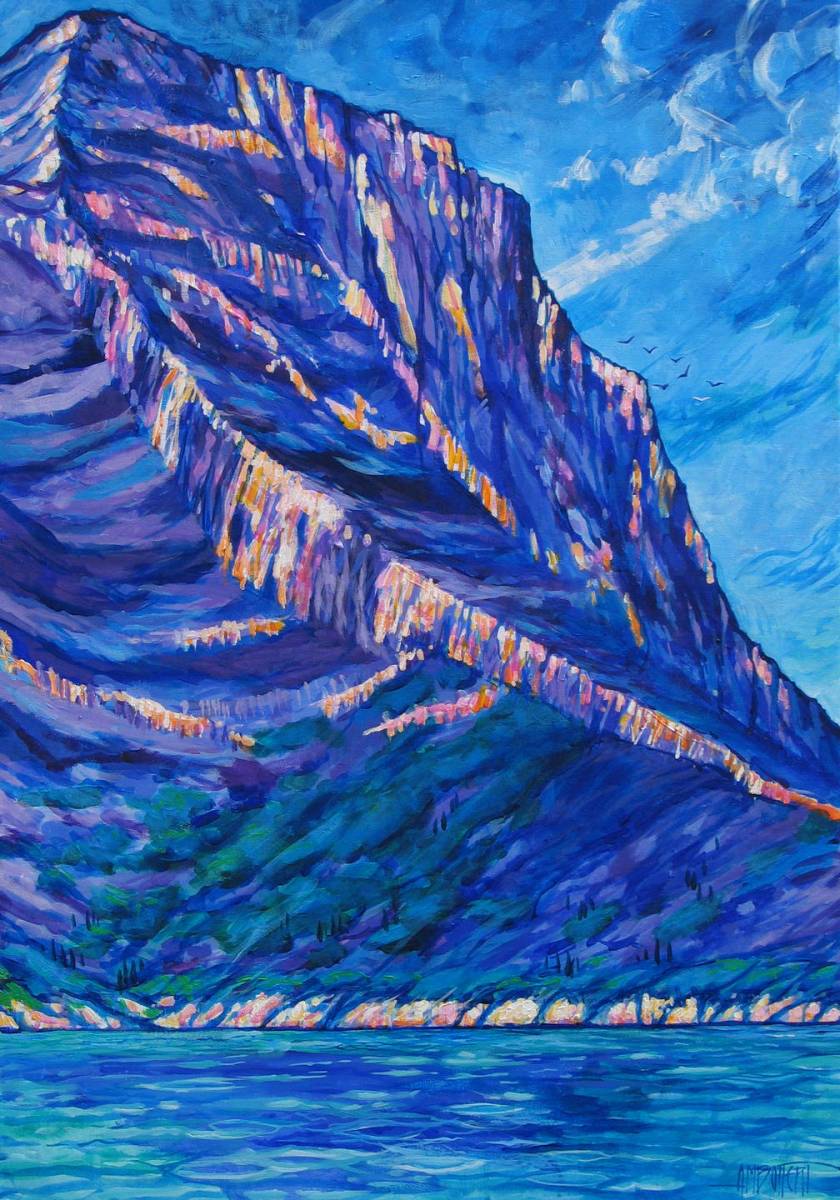
And then, in the end, Split, just as in the beginning. From the first light of day when the first artistic expression was conceived with a view of the sun-drenched slopes and heights of Mosor and Kozjak. Split, recognized as a lavish polyphony—from the dark cemeteries on Marjan, a fascination of the early period, to the opening of semantic centers of bright, rhapsodic reminiscences of all the ineffable power of beauty, the power of its city, bestowed not only on Ana Marija Botteri Peruzović but on every lover of the marvelous palace that became the city. Ana feels that Split is both ethnos and ethos, born from the symmetry of an ancient builder, from the cardo and decumanus; she transforms it into an artistic experience, aware of the metamorphosis it has undergone through all the accidental and personal constructions that today form a hive of amorphous clusters, shadowy courtyards, smooth piazzas, and metaphysical traces of iconic signage left behind on its long journey.
Ana Marija is recognizable in her city; it is her source and her end. Above it, in the multiplication of the real and the spiritual, hovers Saint Domnius, while the red walls and towers that have descended from Ani's brush defend the last traces of identity.
Nevenka Nekić
Gallery of works