THE VOICE OF SILENCE
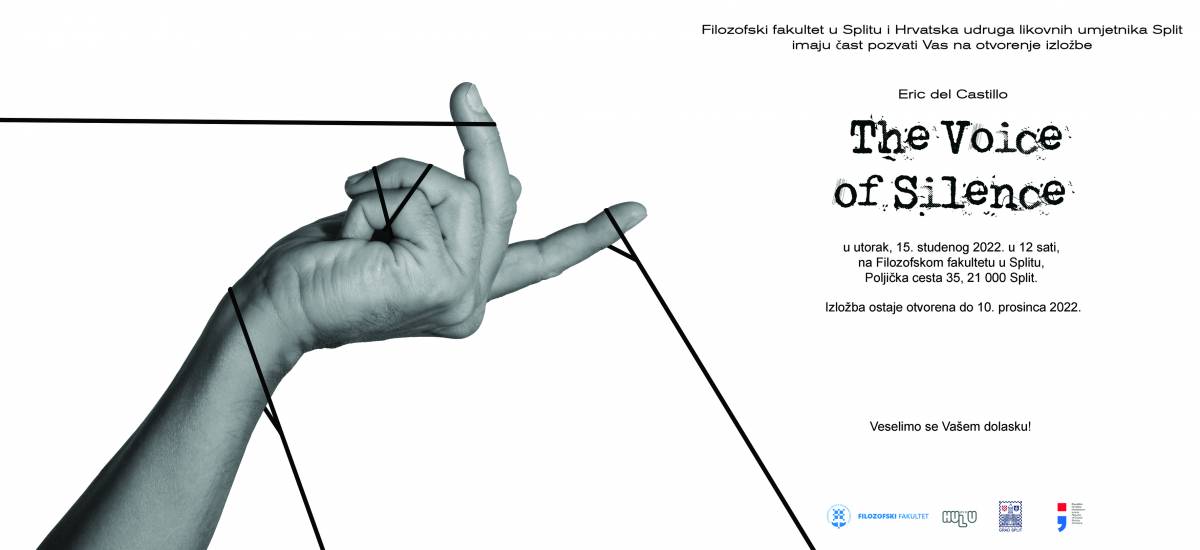
Erica from Real Madrid The Voice of Silence It tackles the issues of violence present in today's societies. Our intention here is not to delve into areas of others' expertise, but to open a conversation about violence that is documented but largely ignored, thereby contributing to its unconscious acceptance and normalization. In fact, this is an artistic platform where experiences are shared in an attempt to break the pervasive silence and casual acceptance of aggression, as well as the unauthorized and unpermitted invasion of personal space. Using his own contacts or available internet sources, Eric has collected harrowing stories that bear witness to the many faces of violence. We can encounter testimonies from individuals with anxiety disorders caused by some form of experienced violence, statistics published by non-governmental organizations and civil society associations, as well as news reports about fatal violence, largely femicide. The artist has transformed all this material into video stories that unfold on screens placed throughout the faculty building. Furthermore, the artist links these stories to depictions of sign language, applied to the glass walls of various faculty offices, using a QR code. They are connected with black tape, suggesting a symbolic web of cause and effect. Specifically, the hand gestures signal gender-based violence, primarily violence against women and individuals of lesbian, gay, bisexual, transgender, intersex, and queer (LGBTIQ) identity. Among the signals, we will also find a warning of the existence of violence—a fist squeezing its thumb—a gesture that was used during the pandemic crisis when staying in the family home became imperative. However, a significant number of dysfunctional families and homes became scenes of aggressive outbursts and direct threats to life, so this signal was unfortunately often sent from windows. The overarching theme of the entire exhibition is actually the stopping of violence, which is vividly represented at the entrance to the Faculty building with an application of the symbol of the stopped fist. It calls for reflection on everyday life and abusive behaviors, as well as a questioning of the dysfunctional system for protecting victims of violence and the proper and timely enforcement of all available legal frameworks.
Dalibor Prančević
___________________
Eric del Castillo He was born in Mexico City in 1962. After studying film and painting, he began a career as an art director and visual artist. He received scholarships from the National Fund for Art and Culture (FONCA), Mexico, and the National Endowment for the Arts (NEA), USA, and was an artist-in-residence at the Headlands Center for the Arts, Sausalito, California. He has exhibited in numerous group and solo exhibitions in Mexico City, Split, Zagreb, Omiš, San Antonio, Madrid, Vienna, Berlin, and elsewhere. In 2018, he donated a documentary collection titled El Sindicato del Terror / Eric del Castillo Found to the Arkheia Documentation Center, MUAC, University Museum of Contemporary Art (UNAM). This collection concerns the performance art archives of the 1980s and 1990s in Mexico – specifically the performance groups El Sindicato del Terror, Los Escombros de la Ruptura, and La Sociedad Mexicana Protectora del Espectador de Performance, as well as the Mexican performance scene in general. He lives and works in Split.
______________
The exhibition was realized with the funds of the City of Split, the Ministry of Culture and Media of the Republic of Croatia, and the Faculty of Humanities and Social Sciences in Split. Eric del Castillo's work was created within the framework of the exhibition project „Reper,“ which was initiated and is moderated by Associate Professor Dalibor Prančević, Ph.D., at the Faculty of Humanities and Social Sciences in Split.
The exhibition remains open until 12/10/2022.